Secrets Under the Ice: How the US Built a Secret Nuclear Base in Greenland
The history of the secret Camp Century project reveals how the US planned to deploy nuclear missiles in the Arctic under the guise of a research station.
 👥Society
Photo: UNIAN
Key points
- Creation of the underground Camp Century base under the guise of a research station
- Implementation of Project Iceworm to deploy 600 ballistic missiles
- Closure of the facility in 1966 due to the instability of the ice sheet
During the height of the Cold War, Greenland became the stage for an ambitious and covert US military plan. Officially known as the Camp Century research station, the base built between 1959 and 1960 actually concealed much larger objectives. Beneath the thick ice, the US military created an entire underground city, equipped with its own nuclear reactor, a hospital, and infrastructure to house 200 people.
Project Iceworm
The true purpose of the operation was the secret "Project Iceworm." Washington planned to deploy a network of 600 medium-range ballistic missiles within the Greenland ice. This would have provided the US with a strategic advantage in nuclear deterrence against the USSR. The project utilized a 1951 defense agreement with Denmark, which granted the Americans broad authority to establish military facilities.
However, nature proved stronger than military plans. Due to the constant movement of the ice sheets, the base's structures began to collapse, forcing the US to shut down operations in 1966. The secret of the missile arsenal remained undisclosed for decades, until a comprehensive study by the Danish Institute for International Affairs in 1997.
Source UNIAN — unian.ua/curiosities/tayemne-misto-ssha-pid-lodami-grenlandiji-shch… ↗
Read next
 🛡️Security
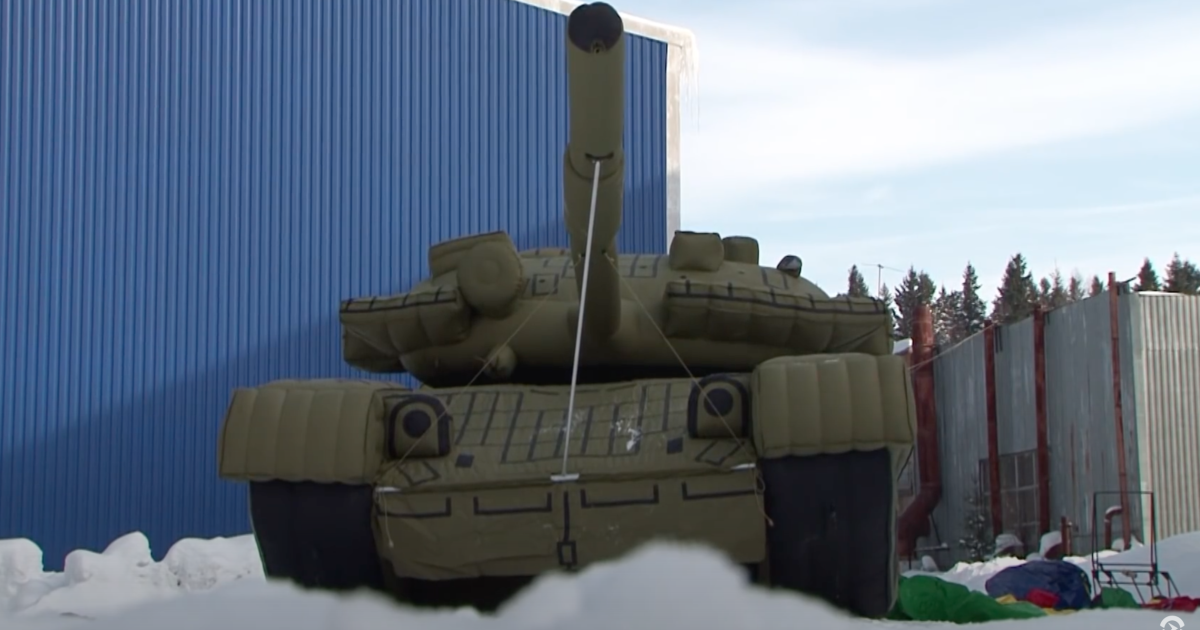
Russia purchases Chinese inflatable military decoys to counter Ukrainian drones
The Russian Federation is mass-ordering realistic inflatable military equipment from China to distract Ukrainian drones from real targets.
 🛡️Security
Ukraine and Norway to Scale Up Production of DESNA Air Defense Systems
Ukraine and Norway are increasing the production of DESNA air defense launchers to counter drone threats.
 🇺🇦Ukraine
Estonia warns against attacks on tankers in the Baltic Sea due to environmental risks
Estonian Prime Minister Kristen Michal stated that the country will not allow its territory to be used for attacks on vessels, citing the threat of environmental disaster…
 🏙️City
Reconstruction of Enerhetykiv Street in Bucha: Mayor comments on construction delays
Bucha Mayor Anatoliy Fedoruk announced the acceleration of works on Enerhetykiv Street following a compromise with the contractor.
 🚨Events
Court upholds detention of woman posing as medic during military facility blockade
The Kyiv Court of Appeal has upheld the pretrial detention of a woman accused of orchestrating provocations at a National Guard unit.
 🛡️Security
Putin threatens 'inevitable response' to attacks on Russian oil refineries
Vladimir Putin has threatened retaliation for strikes on Russian oil refineries, despite calls from Donald Trump to refrain from such actions.